Beyond the Valley of the Kings: Exploring the Mortuary Temple of Ramses III at Medinet Habu
When travelers flock to Luxor’s West Bank, their eyes are usually fixed on the Valley of the Kings or the massive sprawl of Karnak on the opposite shore. But tucked away in the south of the West Bank lies a masterpiece that is often overlooked, yet stands as one of the best-preserved monuments of ancient Egypt.
Welcome to Medinet Habu, the Mortuary Temple of Ramses III.
You might hear locals or older guidebooks refer to this site as the “Temple of Hapu.” While the complex is officially the mortuary temple of the Pharaoh Ramses III, the name “Habu” holds a secret history of its own. In this post, we’ll walk through the massive pylons, decode the battle reliefs, and uncover why this temple is a time capsule of Egyptian history.
What’s in a Name? Medinet Habu vs. The Temple of Hapu
First, let’s clear up a common point of confusion. If you ask for the “Temple of Hapu,” you will be taken here, but technically, the complex is the Mortuary Temple of Ramses III.
So, where does “Habu” come from?
Within the massive enclosure walls of Ramses III’s temple, there is a smaller, older shrine dedicated to Amenhotep, son of Hapu. He was a famous architect, sage, and physician from the 18th Dynasty (serving under Amenhotep III). Centuries after his death, he was deified as a god of healing. Pilgrims flocked to his shrine within the temple complex, and over time, the entire area became known as Medinet Habu (The City of Habu).
So, when you visit, you are walking through Ramses III’s grand legacy, standing on ground sanctified by the wisdom of Hapu.
The Last Great Warrior Pharaoh
Ramses III (reigned c. 1186–1155 BC) was the second pharaoh of the 20th Dynasty. He is often considered the last great warrior king of the New Kingdom. During his reign, Egypt was under threat from invasion, economic collapse, and internal strife.
He built this temple not just as a place of worship for the god Amun-Ra, but as a monument to his power and stability. He wanted to ensure his cult would survive forever, and thanks to the dry Egyptian climate and the temple’s sturdy construction, he largely succeeded.
Architectural Highlights: A Fortress of Stone
Approaching Medinet Habu, the first thing you notice is its fortress-like appearance. Unlike the open columns of Karnak, this temple feels fortified. This wasn’t just for show; during the 20th Dynasty, the West Bank was vulnerable to Libyan incursions.
1. The First Pylon
The entrance is dominated by a massive first pylon, rising over 20 meters high. It depicts Ramses III smiting his enemies before the gods—a classic pose of pharaonic power intended to keep chaos (Isfet) at bay.
2. The Colonnaded Courts
Once you pass through the gate, you enter the first court. Here, you are greeted by Osiride pillars—statues of the king in the guise of Osiris, the god of the afterlife. Notice the vibrant colors still clinging to the carvings. While many temples have faded to bare sandstone, Medinet Habu retains blues, reds, and yellows that give you a true sense of how colorful ancient Egypt really was.
3. The Battle Reliefs (The Sea Peoples)
This is the crown jewel of Medinet Habu. The exterior walls of the temple feature some of the most important historical records in Egyptology.
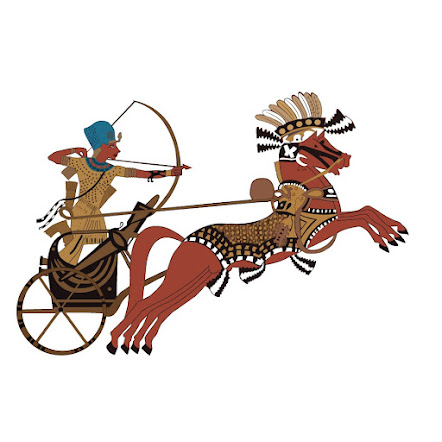
- The Land Battle: Chariots clash, horses trample, and archers fire.
- The Naval Battle: Perhaps the most famous relief. It depicts the Egyptian navy fighting the Sea Peoples, a confederation of seafaring raiders who threatened the entire Mediterranean.
- The Aftermath: You can see scribes counting the severed hands and phalluses of the enemy to tally the kill count—a gruesome but vital administrative record of victory.
These reliefs are like a comic book of antiquity, providing us with detailed knowledge of ancient weaponry, ship design, and military tactics.
A Temple of Many Layers
One of the most fascinating aspects of Medinet Habu is that it wasn’t abandoned when the Pharaohs fell.
- The Coptic Era: In the early Christian era, the temple was converted into a church. You can still see Coptic frescoes and altars built into the ancient stone.
- The Nuns: In the 8th century AD, a convent was established within the temple grounds. The “Nuns of Medinet Habu” left behind inscriptions and graffiti that tell us about life in Egypt nearly 2,000 years after Ramses III died.
Standing in the second courtyard, you are literally standing in three different eras of history: Pharaonic, Roman/Christian, and Islamic.
Visitor Tips: How to Experience Medinet Habu
If you are planning a trip to Luxor, here is how to make the most of this site:
- Go Early: Like all sites in Luxor, the heat can be intense. Arrive right when it opens (usually 6:00 AM) to beat the tour buses and the sun.
- Hire a Guide: While the temple is stunning visually, the hieroglyphs tell complex stories. A knowledgeable Egyptologist can translate the battle scenes and explain the significance of the smaller shrines.
- Don’t Rush: Most people spend 45 minutes here. Take an hour. Sit by the Sacred Lake (which is still filled with water) and imagine the priests performing rituals thousands of years ago.
- Combine Your Ticket: Medinet Habu is usually part of the “West Bank Premium Ticket,” which also includes the Valley of the Kings, the Temple of Hatshepsut, and the Tomb of the Nobles.
Final Thoughts
The Mortuary Temple of Ramses III is more than just a collection of stones. It is a testament to human resilience, artistic brilliance, and the enduring desire to be remembered.
While the “Temple of Hapu” name hints at the wisdom of a sage, the walls themselves scream the power of a King. Whether you are a history buff, a photography enthusiast, or a traveler seeking the magic of the ancient world, Medinet Habu deserves a top spot on your itinerary.